




The same active ingredient in different formats can produce meaningfully different outcomes. Format affects bioavailability, onset time, dose accuracy, shelf stability, and, perhaps most practically, whether you will consistently use the supplement long enough to see results. Here is how to choose.
Capsules and Tablets: The Baseline
Hard-shell capsules (gelatin or plant-based) and compressed tablets are the most common supplement formats. They are well-studied, relatively inexpensive to manufacture, allow stable storage of a wide range of ingredients, and can contain precise doses. Their limitations are the inherent delays of GI absorption (20-60 minutes to peak blood levels depending on the compound), potential for gastric degradation of sensitive compounds, and the variability of absorption influenced by meal timing and individual GI function. Tablets and capsules are the appropriate format for most compounds that have good intrinsic oral bioavailability and do not benefit from faster onset.
Powders: High Flexibility, Moderate Convenience
Powders excel for compounds requiring high doses that would require large or multiple capsules (protein, creatine, magnesium), or when custom dosing is needed. They are generally cost-effective and shelf-stable. The limitations are preparation requirements (mixing, liquid access), palatability issues, and reduced portability. For pre-workout compounds and protein supplementation, powders remain the most practical high-dose delivery vehicle. For everyday micronutrient supplementation, the preparation barrier reduces adherence in most real-world settings.
Sublingual and Buccal Strips: When Speed and Bioavailability Matter
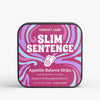
Strips are the appropriate format when faster onset is clinically meaningful (caffeine for acute focus, melatonin for sleep onset, pain management in pharmaceutical applications), when GI absorption is impaired or inconsistent (B12 in individuals with intrinsic factor issues, zinc in populations with gut inflammation), when portability without water access is required, or when the active compound benefits from avoiding first-pass hepatic metabolism. The premium over capsule pricing reflects the more complex manufacturing process but is justified for compounds where the bioavailability differential produces real-world outcomes.
Liquids: Fastest Oral Absorption, Most Difficult to Transport
Liquid supplements have faster GI absorption than capsules or tablets (no dissolution step required), making them suitable for compounds requiring reasonably rapid onset. The limitations are refrigeration requirements for many products, liquid allowance restrictions for travel, higher per-dose cost, and the instability of many active compounds in aqueous solution. Liquid probiotics, liquid iron, and liposomal delivery formats for fat-soluble nutrients are the main cases where liquid format provides genuine bioavailability advantages over solid forms.
Choosing for Your Goals
For daily foundational supplements (vitamin D, omega-3, magnesium) where onset timing is irrelevant: quality capsules or softgels with appropriate formulation. For acute performance support (energy, focus, sleep onset) where timing and onset matter: strips. For high-dose compounds where per-gram cost is the priority (protein, creatine): powder. For the convenience-first person whose primary challenge is consistent adherence: strips reduce friction to the minimum. See our full exploration of how supplement strips work for the detailed science.
Match the format to the goal. Convict Labs strips are engineered for the supplement categories where delivery speed and bioavailability move the needle most. Shop the range.
